Consumer electronics / Ecommerce
Boss Audio SystemsA dual-brand storefront, WordPress to Shopify
A replatformed ecommerce experience for a car, marine, and powersports audio group: one design system carrying two brands, a purchase flow rebuilt around how enthusiasts actually shop, and a 3x conversion lift.
- Client
- Boss Audio Systems
- Sector
- Consumer electronics / Ecommerce
- Scope
- Research and purchase-flow mapping, design system, responsive storefront, WordPress to Shopify replatform, landing pages
- Role
- Principal design
- Live
- bossaudio.com
3x
Increase in conversion rate after the replatform, per program analytics
60%
Lift in mobile engagement
80%
Faster page loads on the new storefront
Overview
Boss Audio Systems builds audio for car, marine, and powersports buyers, with a premium line under Boss Elite. The group needed a storefront that could give the brand a distinct voice, carry two brands under one system, and turn enthusiast traffic into orders, on a platform that would not fight them.
The challenge
Shoppers arrive from paid, organic, dealer, and retail traffic and expect the story to hold together from ad to product page to cart. The existing WordPress build could not keep up with the catalog or the campaign cadence, and the two brands needed visibly different treatments without becoming two sites.
The approach
Research before pixels. Customer segments, purchasing behavior, and the full purchase flow were mapped to the events the business already measured, so the redesign targeted the steepest drop-offs instead of refreshing everything.
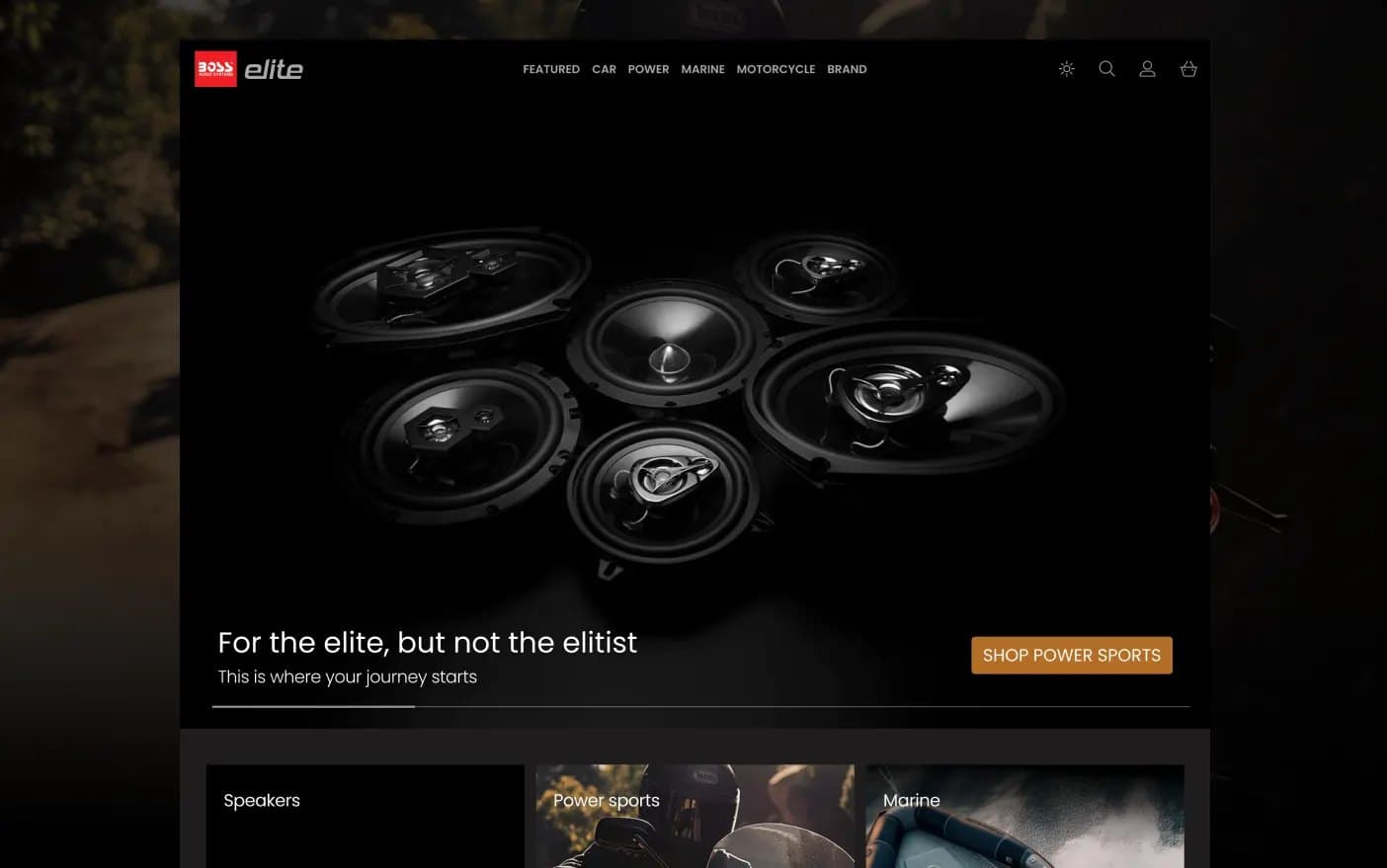
One system, two brands. Design directions ran from product-first to brand-first to a hybrid; the result is a shared component, type, and icon system with distinct visual treatments for Boss Audio and Boss Elite, consistent across car, marine, and motorsport categories.
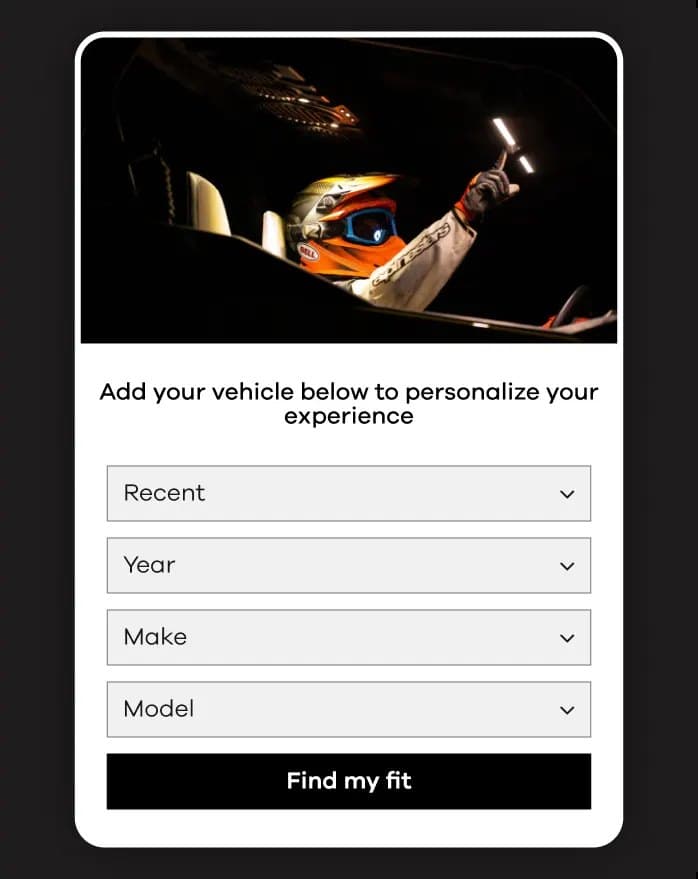
Fit first, then shop. A vehicle-fit flow ("Add your vehicle") personalizes the storefront up front, so the right products surface before the shopper starts filtering.
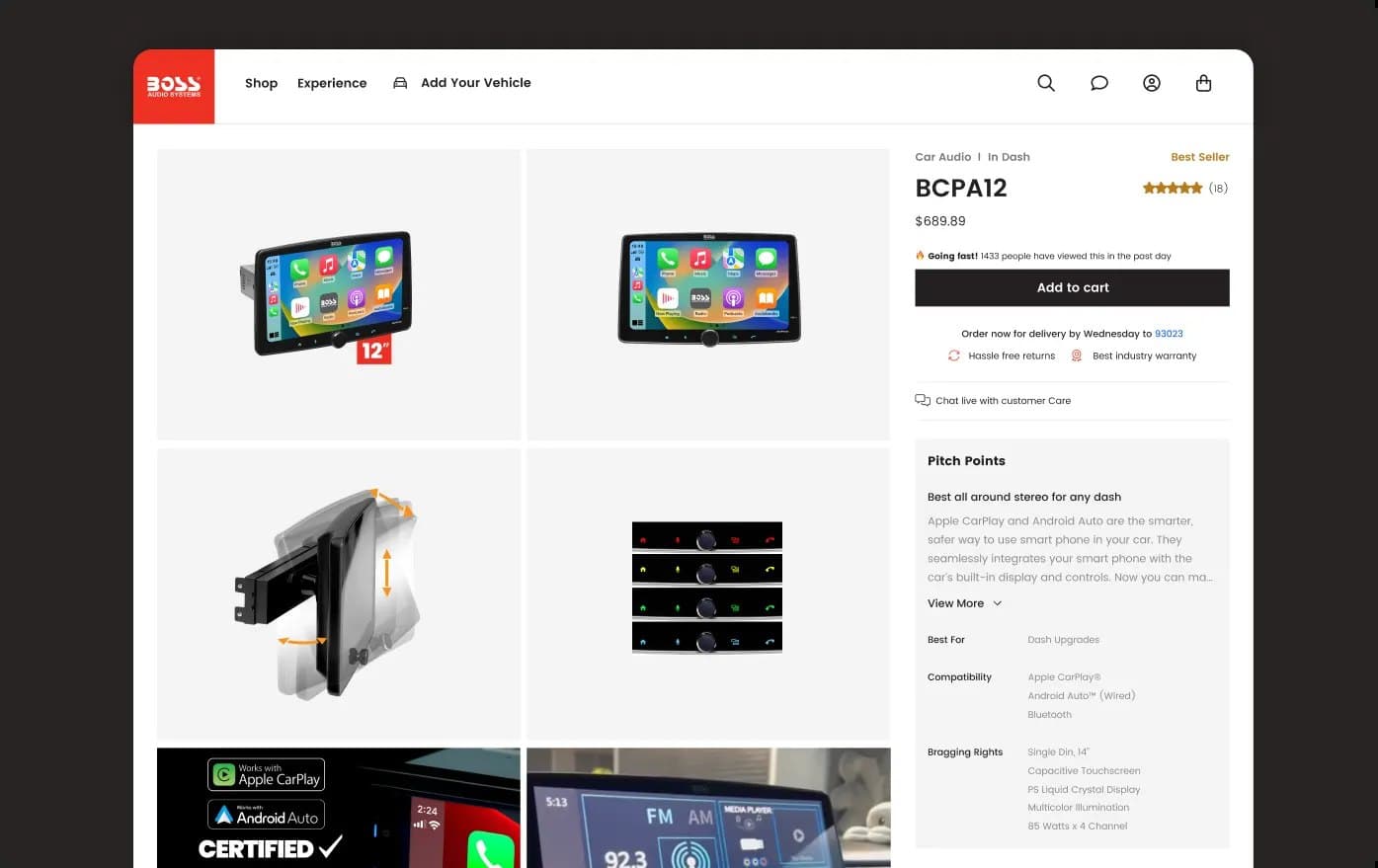
Replatform to Shopify. The move from WordPress to Shopify came with a responsive component library, product filters, reviews and media integrations, analytics, and a deployment pipeline so the team could ship without a designer in the loop.
The outcome
Conversion rate tripled after launch, mobile engagement rose 60%, and pages loaded 80% faster, per the program's analytics. The storefront now carries both brands from one system, and the landing page program built on it feeds campaigns across the group.