Automotive / In-car commerce
Mavi.ioIn-car commerce, shown in Stellantis vehicles
The OnMyWay in-dash experience that carried a first-of-its-kind in-car marketplace into Stellantis vehicles at CES and SXSW 2023, designed from 500 driver surveys and 50 ride-alongs, and behind a $4.7M seed round.
- Client
- Mavi.io
- Sector
- Automotive / In-car commerce
- Scope
- Driver research, design principles, in-dash HMI, voice ordering model, design system for automotive displays, prototype testing, dev handoff
- Role
- Principal design
- Live
- mavi.io
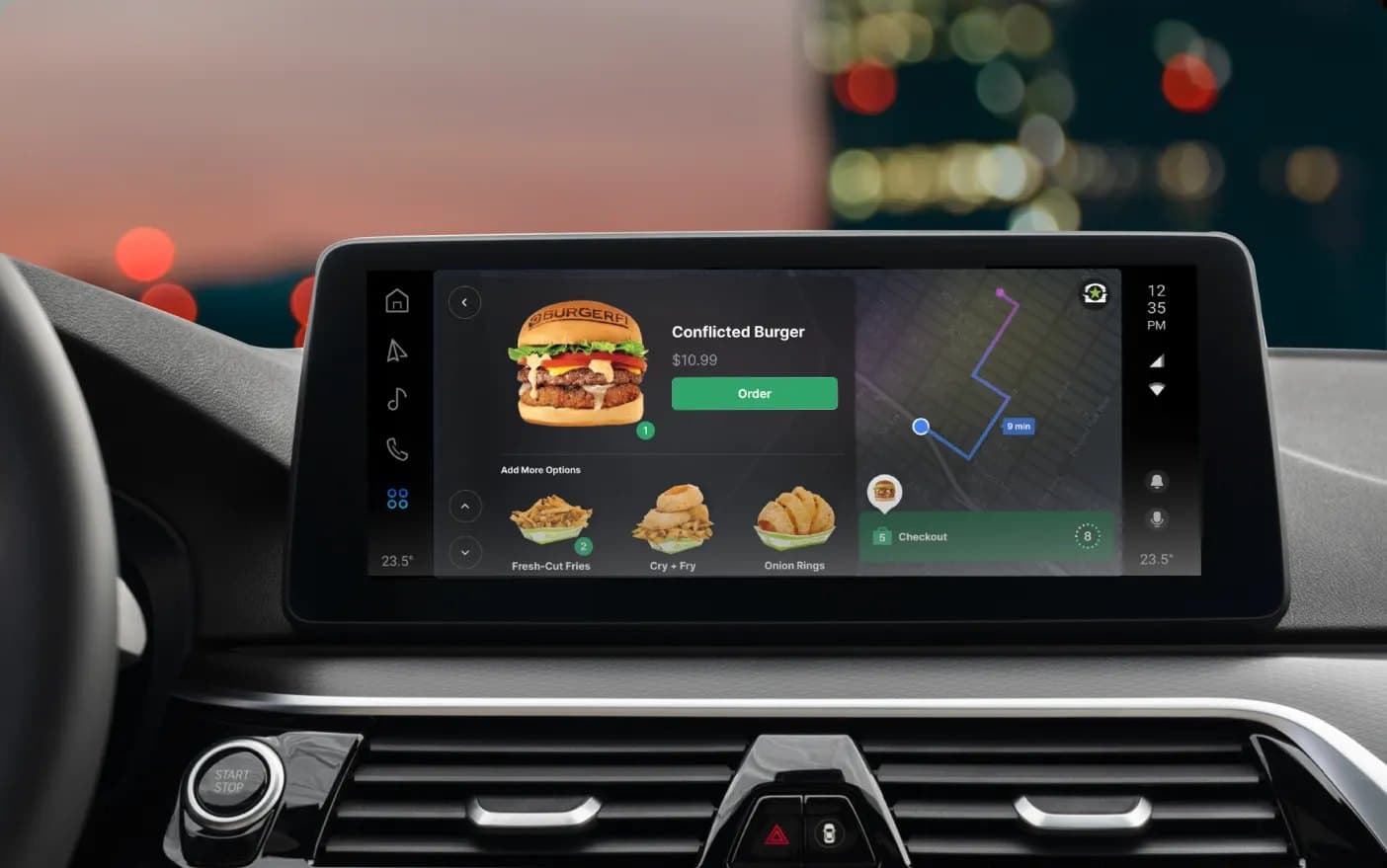
CES + SXSW 2023
Demonstrated in Stellantis vehicles with BurgerFi, MrBeast Burger, and Olo
$4.7M
Seed funding raised on the strength of the platform
500 + 50
Survey respondents and in-depth interviews behind the design principles
Overview
Mavi.io is building OnMyWay, an in-car commerce marketplace: the driver orders food, groceries, or retail pickup from the dashboard, by voice or touch, and collects it along the route. The company came to Veradin with a platform to prove and a room full of OEM and retail partners to prove it to.
The challenge
Phone ordering apps are unsafe at the wheel: too many taps, too much scrolling, too much typing. The in-dash version had to be hands-free first, work inside driver-distraction law and OEM guidelines, fit a dashboard's screen real estate, and still feel like something a partner could put in a production vehicle.
The approach
Research on the road. Surveys with 500 drivers and 50 in-depth interviews and ride-alongs with commuters, parents, and delivery drivers produced the principles: minimize choices and inputs, sync with navigation, predict pickup times, curate the menu, and support voice with minimal touch.
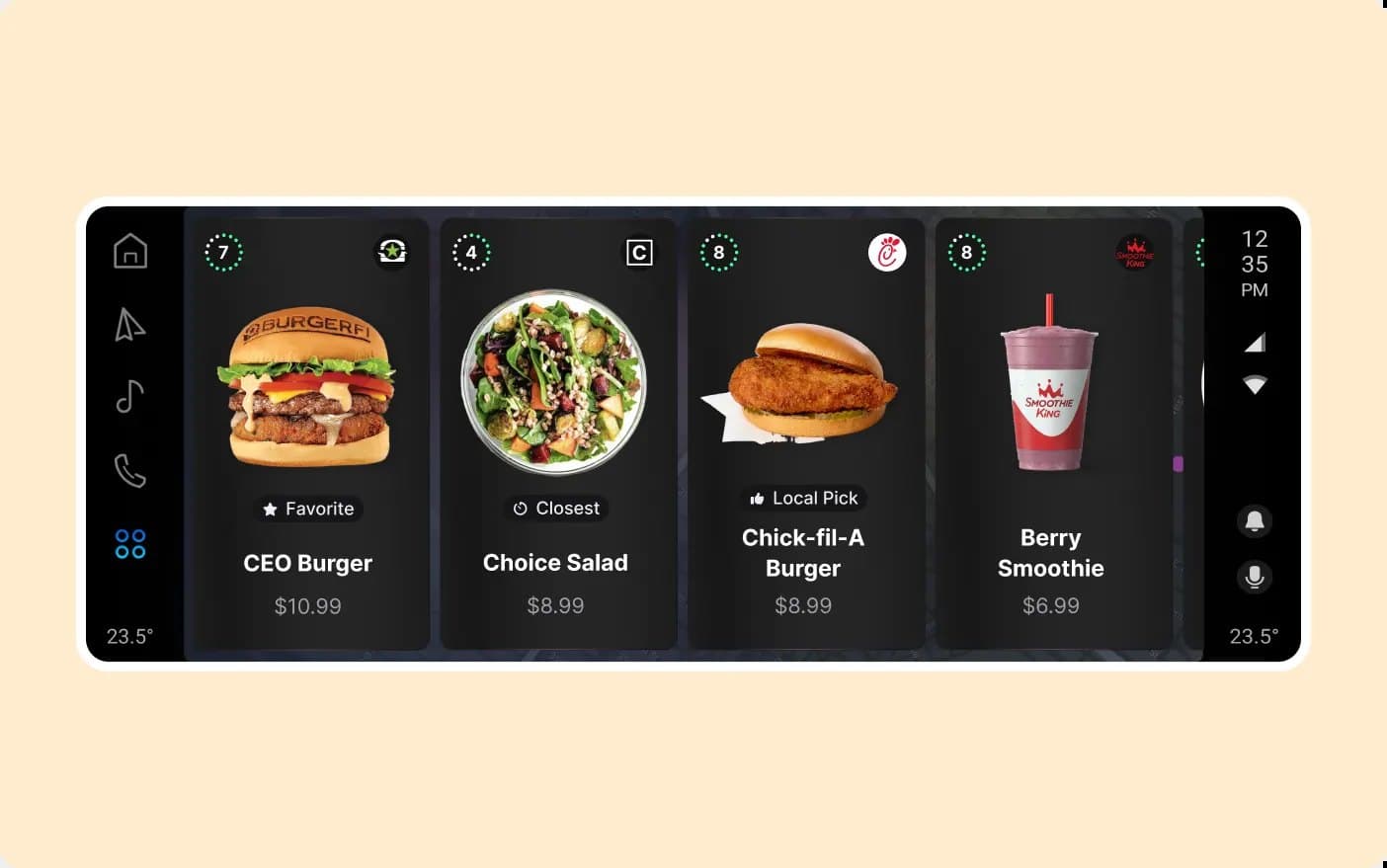
Design inside the constraints. The HMI was developed with Harman and Google's Android Automotive OS team on safety practice: essential functions first, glance time and tap count as the budget, and a display design system that OEMs can restyle.
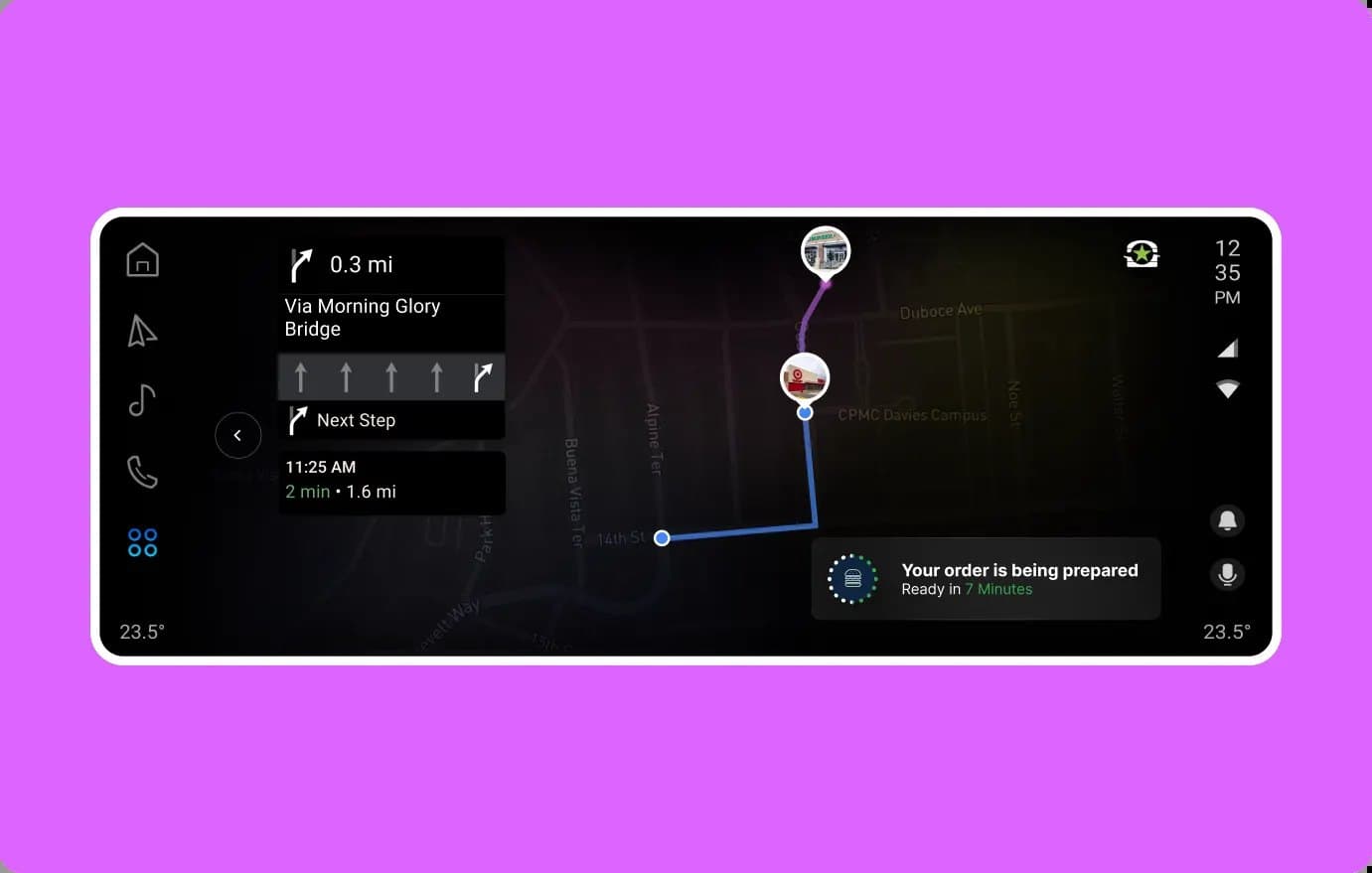
Voice as the primary path. A conversational ordering model, "Hey Mavi," with touch as the fallback and defined behavior when recognition fails or the car goes offline.
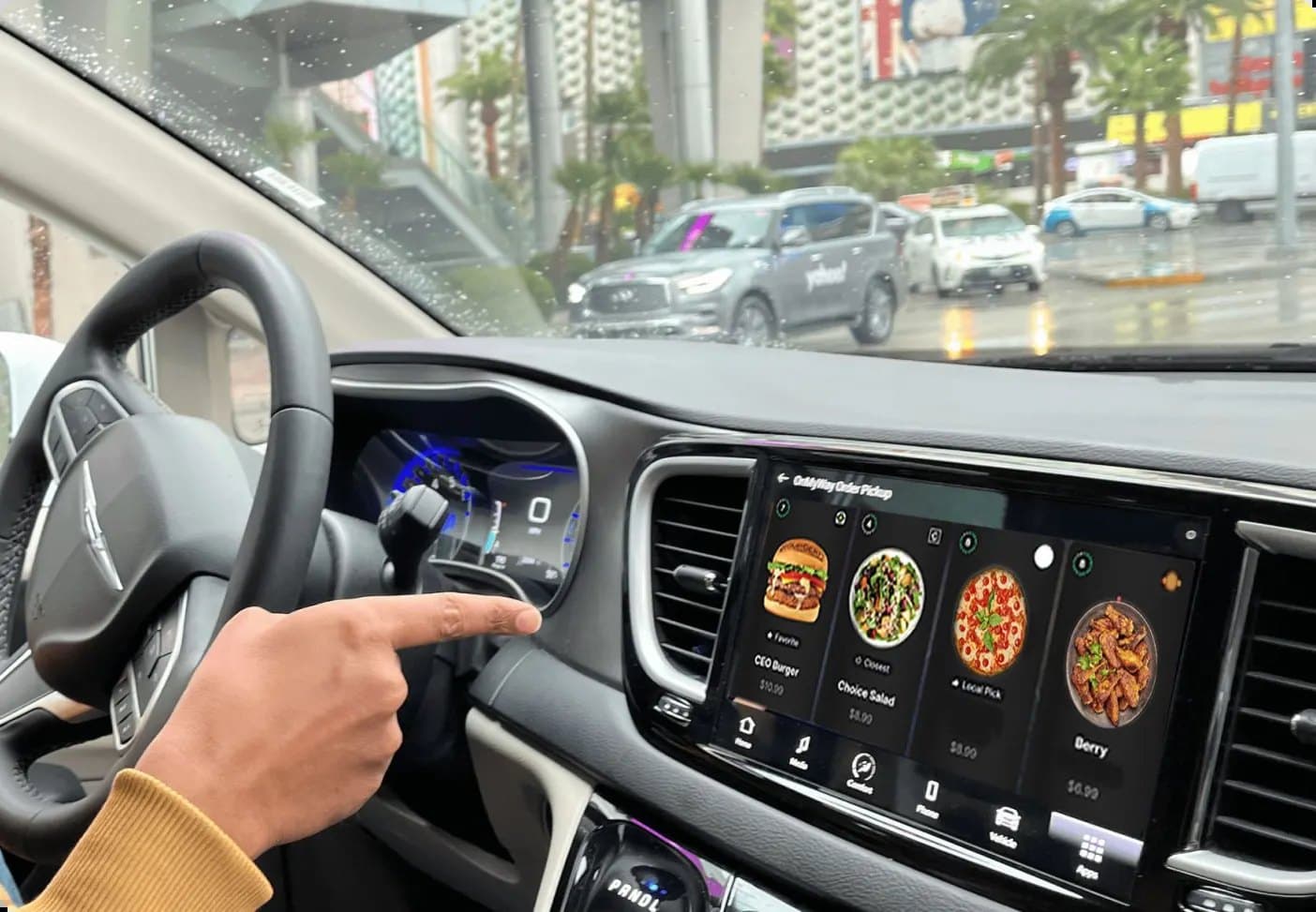
Prototype, test, hand off. Interactive prototypes tested with drivers, session recordings and heat maps to tune the flows, and redlined handoff to the client's React Native team.
The outcome
OnMyWay was demonstrated in Stellantis vehicles at CES 2023, at SXSW 2023 in Chrysler Pacificas, and at the 2023 Detroit Auto Show. Mavi.io raised $4.7M in seed funding on the platform and reports pilots with Stellantis and Volkswagen Group. Event and funding facts are from Mavi.io's own announcements; partner metrics are proprietary.